
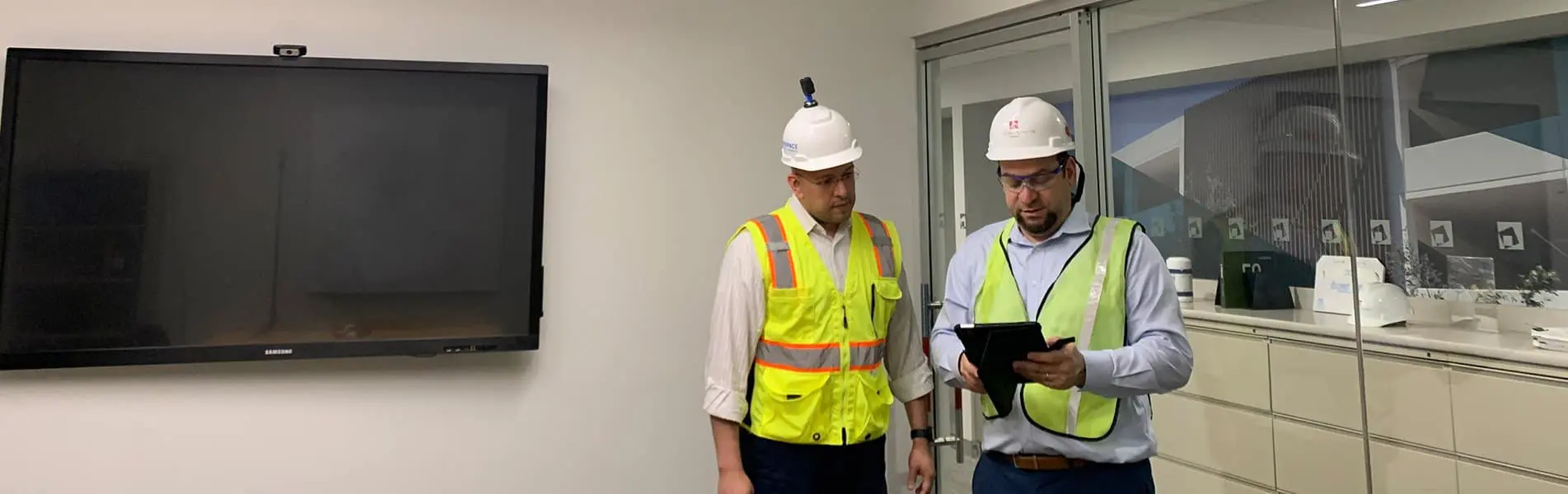
For over 90 years, Syska Hennessy has worked toward making its workflows more efficient for both clients and design . One of the biggest challenges for the AEC industry is the “Site Capturing/Reporting” process, which takes place during construction. For years the steps were: travel to the site, capture its development, call-out potential issues, and generate a report (TCCR). This process was time-consuming and often counterproductive. For example, reports shared with the project team quickly became obsolete because construction had progressed. The same was true of data shared through reports, images, and comments. And if a critical item was overlooked during the initial visit, another site visit was required – this meant starting the process all over again.
We felt sure that there was a better way. To find it, we started reevaluating the TCCR process five years ago. Our first step was to invest in a desktop application that manages project data with the promise of facilitating site surveys. However, expansion of the application would have required more resources and added to the day-to-day workflow. So we examined applications used by the construction industry. After several initial trials it was clear that these applications weren’t a good fit for the design industry or its clients. Therefore, in 2020 Syska Innovations decided to partner with OpenSpace, which develops technology tailored for these specific users.
Within three months of using OpenSpace’s site-capturing application, Syska Hennessy’ TCCR process had improved. The application, known as “The jobsite time machine,” was not only enhancing project insight, but also driving designers and engineers to explore additional uses. We liked the application because it:
- Keeps data dynamic
- Ensures data is accessible and secure
- Simplifies workflow while enhancing it
- Integrates with developing technologies
Here are a few examples of how we’re using OpenSpace:
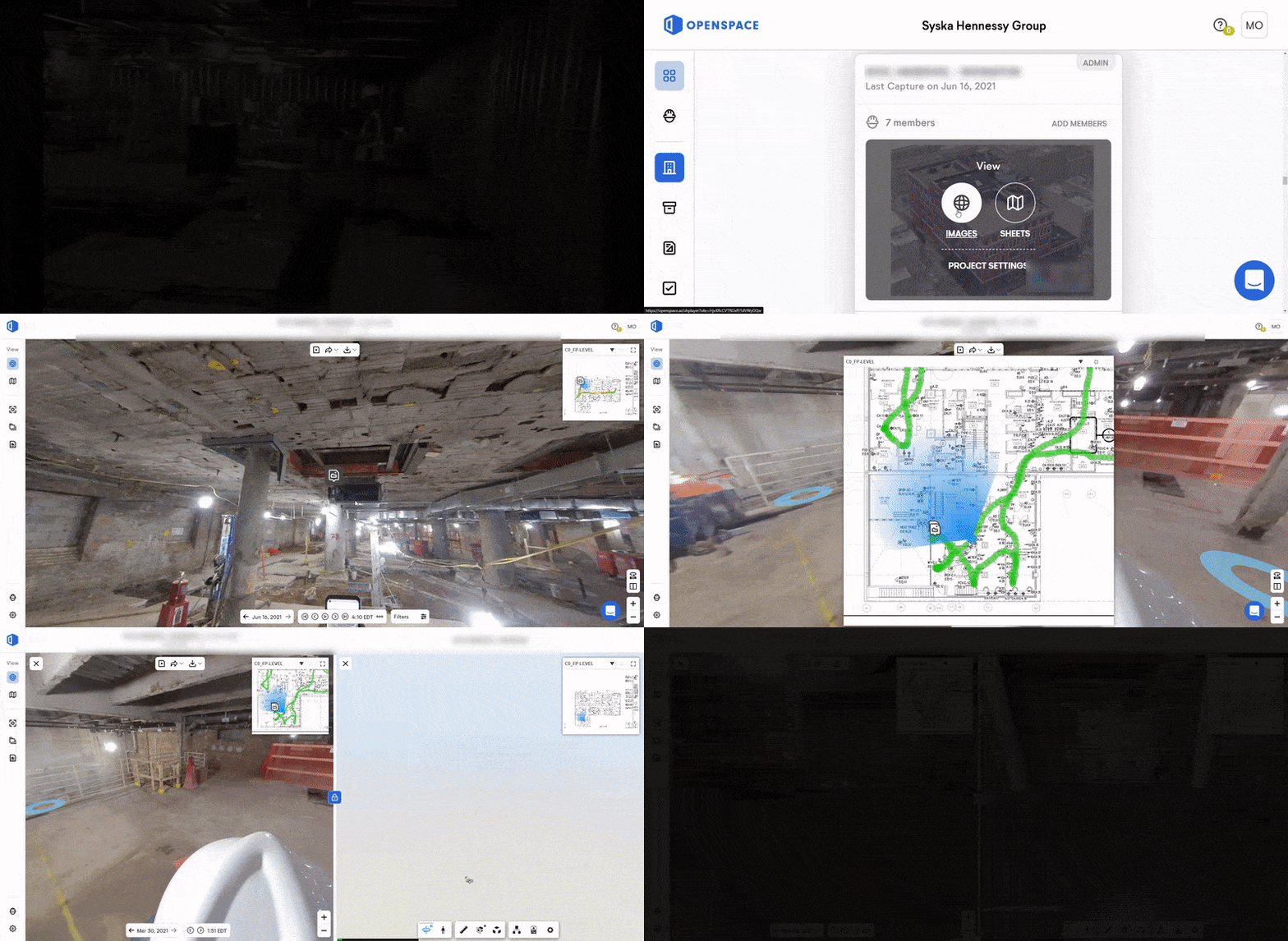
- Site visit timeline. In the industry, the ability to compare design and construction from a site visit was a game-changer. However, the ability to compare captures from various times takes coordination to another level. Now we can view MEP systems prior to construction of walls, ceilings, and floors, and this makes our jobs much easier.
- Virtual site visits. Site visits, although vital to a project, do take a lot of time. This became more evident during the early part of the pandemic. Each site visit involves planning, scheduling personnel, prepping …. OpenSpace facilitated these activities by allowing a single person to visit the site, capture existing conditions using a 360 camera, and quickly share them with the entire team.
- Integrated PDF report. Survey reports are critical when design and construction come together. However, what once took hours to gather, compile, and generate now takes minutes. Images of critical design items can be commented on, tagged, and tied to floor plans, all via a mobile device. Once the information is uploaded to the cloud a PDF report can be generated. The PDF lists each design item with hyperlinks to a detailed page elaborating on what was captured or to the project cloud for a more interactive experience.
- Adopting mobile scanning tech, LiDAR. With the advancement of technology, the empowerment of a design engineer has grown. In the “olden” days, to verify what was constructed is up to code and has the necessary clearances, design engineers would have to measure the equipment and its surrounding area. Syska has be testing the OpenSpace 3D Scan (BETA) tool that enables a mobile device with LiDAR technology to create a 3D model of a scanned space. The model is then uploaded to the project cloud and tied to a floor plan. This quickly allows an engineer to review the model, measure it, and compare it to the approved construction documents.
The search for improving the TCCR process is a never-ending one. Applying what we have learned through our explorations of OpenSpace will help us generate the insight and transparency a project team needs. We are looking forward to seeing how Syska Innovations and its partners are working toward finding solutions other technologies on the market today — such as a LiDAR scanner in a mobile device, virtual and augmented reality with tactile sensors, or A.I. to facilitate complicated tasks. The possibilities are endless.
Stay Tuned!