
So for all you business buffs and Jim Collins fans out there: Built to Last and Good to Great are excellent reads. Interestingly, there is very little coverage of businesses in the architectural and engineering community, probably because not many are public. (Side note: Of the 30+ companies profiled in those books, only five turned out to be “exceptional” — guess they weren’t “built to last.”)
So here is a small snippet of our business story and how we tried to go from good to great and become a company that would be built to last:
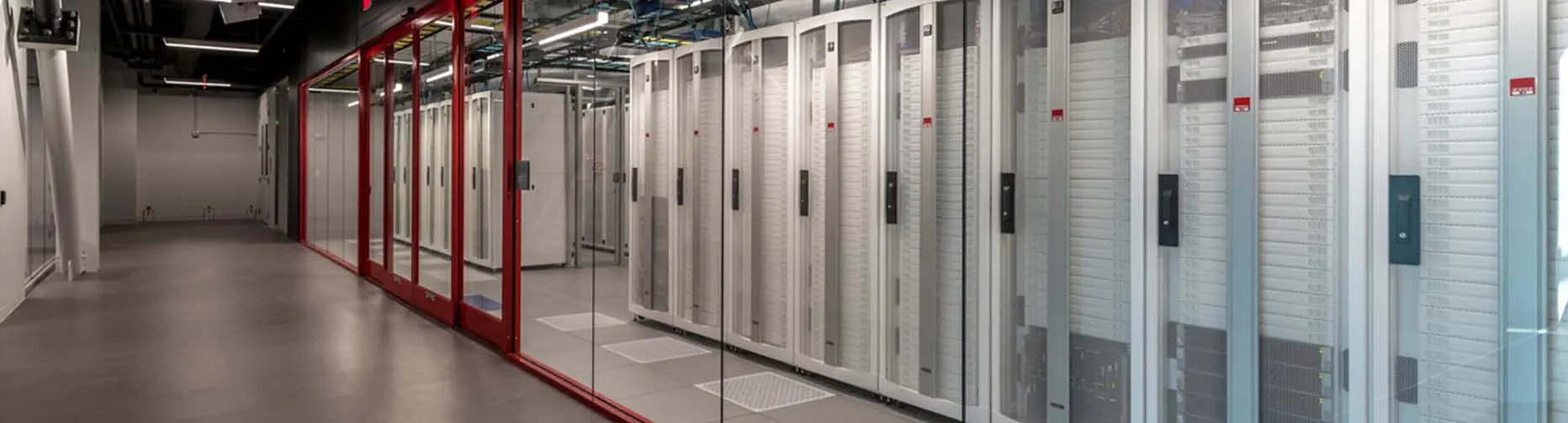
Of all the construction markets, I would argue that the datacenter has undergone the most drastic changes over the last 15 years. For us, three major events disrupted our business:
Looking back 10 years ago, my partner and I were sitting in an industry conference and the speaker was talking about virtualization and data de-duplication. These technologies were going to revolutionize the datacenter industry and efficiencies were going to go through the roof. My business partner looked at me and said, “Looks like we are in for a slowdown in datacenter builds.” Sure enough, the prognosticator was right and our clients one by one started saying they were suspending datacenter plans as they virtualized their servers.
In short, virtualization was bad for our business, which mostly catered to unique enterprise data centers. We decided to jump on the train and bolted on energy-efficiency upgrades to existing datacenters fueled by this new virtualization. This meant many more but smaller projects.
Over the course of the next five years virtualization ran its course and owners’ demand for technology came back. Only now they were deciding in droves to outsource the building and operation of these datacenters to colocation companies with prototypical designs. Major event #2: We found ourselves having to pivot as the number of clients available in the market had shrunk drastically. Meanwhile, the amount of megawatts we put in play doubled, but due to market pressures our fees for such services fell in half. We adjusted, however. Focusing on fewer clients and innovating in our efficiency of production of designs helped us get from good to great.
Fast forward five years and the datacenter market rebounded with work a plenty. Yet another major innovation was brewing, also fueled by virtualization, but an outsourced version. At an industry event a speaker started talking about the cloud. Not the fluffy things in the sky but actual datacenter environments that were being set up by Microsoft, Amazon, and Google, amongst others. Why build a datacenter with servers when you can just rent what you need virtually? All you need is a strong internet connection. This was the dagger that almost completely eliminated the enterprise datacenter, which for years represented our core group of clients. So we pivoted and focused heavily on working for cloud providers. In this case, by meeting the clients’ specific standards and site-adapting their conceptual designs to multiple campuses across the world, we were able to position ourselves to be built to last.
Now the datacenter market is dominated by the major hyperscalers and those who provide this cloud service. They dominate both by being the target tenant of the colocation providers and the multitude of buildings they build for themselves. There appears no end in sight to the need for datacenters that these companies are driving. But my Spidey sense tells me there is another disruption coming — something that will prompt us to pivot our business again.
Could it be the precipitous fall of crypto? Probably not — We never considered that market in our portfolio and it’s not connected very well to other datacenter markets.
Could AI algorithms reduce the amount of storage and processing power we need centralized as it harnesses the power of all systems connected to the internet? Virtualization for the entire world? Maybe.
Do social media and video streaming companies start erasing irrelevant old data form their storage environments, thereby freeing datacenter storage? Probably, but that most likely wouldn’t disrupt the engineering business.
Will magneto-electric spin-orbit transistor technology bear fruit and drastically alter the current electrical infrastructure systems we have in place for datacenters? To be determined.
I am not sure our engineering business can withstand another round of doubling the size of our projects along with reductions of our engineering fees. But I am confident that we will anticipate future disruptions and pivot again as we aspire to be built to last.
By the way, if you have any ideas on these disruptions, please share so I can prepare our business accordingly!